QGIS: A Free and Open-Source GIS Tool for Spatial Analysis
Geographic Information Systems (GIS) have become an essential part of modern decision-making, helping organizations analyze location-based data and uncover valuable insights. From urban planning and infrastructure development to environmental monitoring and disaster management, GIS technologies enable professionals to visualize, manage, and interpret complex spatial information. While several commercial GIS platforms dominate the market, one solution has consistently gained global recognition for its accessibility, flexibility, and powerful capabilities: QGIS.
Originally known as Quantum GIS, QGIS has evolved into one of the world’s most widely adopted open-source GIS platforms. Today, it is used by governments, research institutions, businesses, NGOs, and geospatial professionals to perform everything from basic mapping to advanced spatial analysis. Its growing popularity stems from the fact that it provides enterprise-grade GIS functionality without the licensing costs associated with many proprietary software solutions.
As geospatial technologies continue to expand into industries such as agriculture, utilities, transportation, and smart cities, QGIS has become a valuable tool for organizations seeking cost-effective yet powerful GIS capabilities.
What Is QGIS and Why Has It Become So Popular?
QGIS is a free and open-source Geographic Information System designed for creating, editing, visualizing, analyzing, and sharing geospatial data. First released in 2002, the platform has grown through the contributions of a global community of developers, GIS specialists, researchers, and organizations.
Unlike many GIS solutions that require expensive software licenses, QGIS is freely available and can be installed on Windows, Linux, and macOS systems. This accessibility has made it particularly attractive for educational institutions, startups, government agencies, and organizations operating with limited budgets.
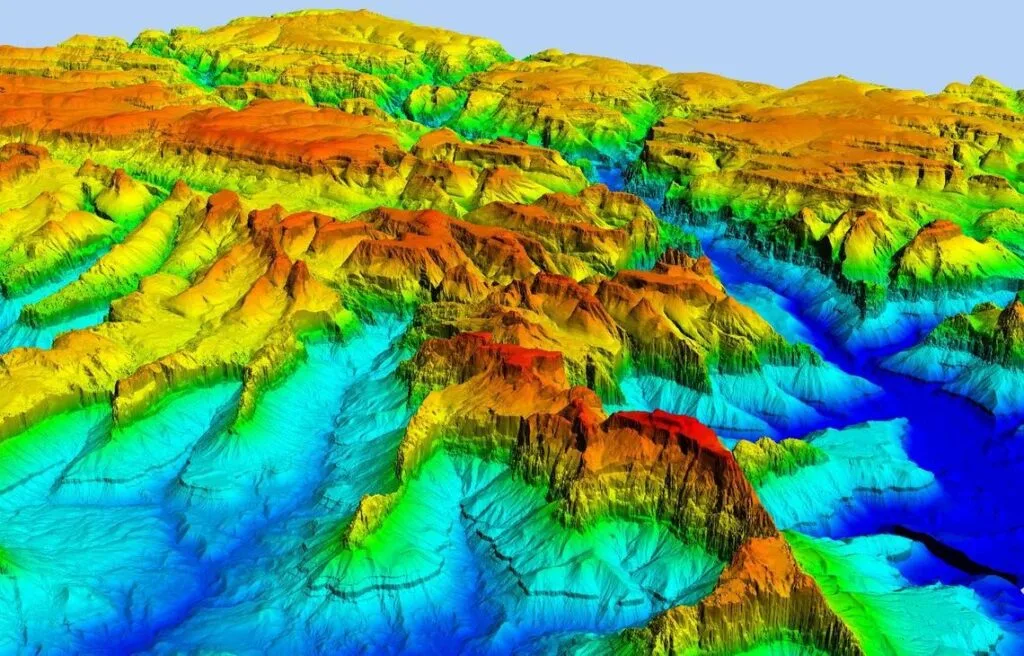
One of the biggest strengths of QGIS is its versatility. Users can work with vector data, raster imagery, satellite imagery, LiDAR datasets, GPS data, and numerous other geospatial formats within a single environment. The platform supports industry-standard file formats and integrates seamlessly with spatial databases such as PostgreSQL/PostGIS.
The evolution of Quantum GIS into a mature enterprise-grade platform has positioned it as a serious alternative to many commercial GIS products. Today, it is widely used for cartography, spatial modeling, asset management, environmental analysis, and geospatial intelligence projects around the world.
Key Features That Make QGIS a Powerful GIS Platform
One reason for QGIS’s widespread adoption is the extensive range of tools it offers for spatial data analysis and visualization.
At its core, QGIS provides advanced mapping capabilities that allow users to create professional-quality maps using customizable symbology, labels, layouts, and visualization techniques. Whether developing thematic maps for public communication or technical maps for engineering projects, users have complete control over map design.
Beyond visualization, QGIS includes powerful geoprocessing and spatial analysis tools. Users can perform operations such as buffering, overlay analysis, network analysis, terrain modeling, interpolation, and suitability analysis. These capabilities enable organizations to answer complex geographic questions and make data-driven decisions.
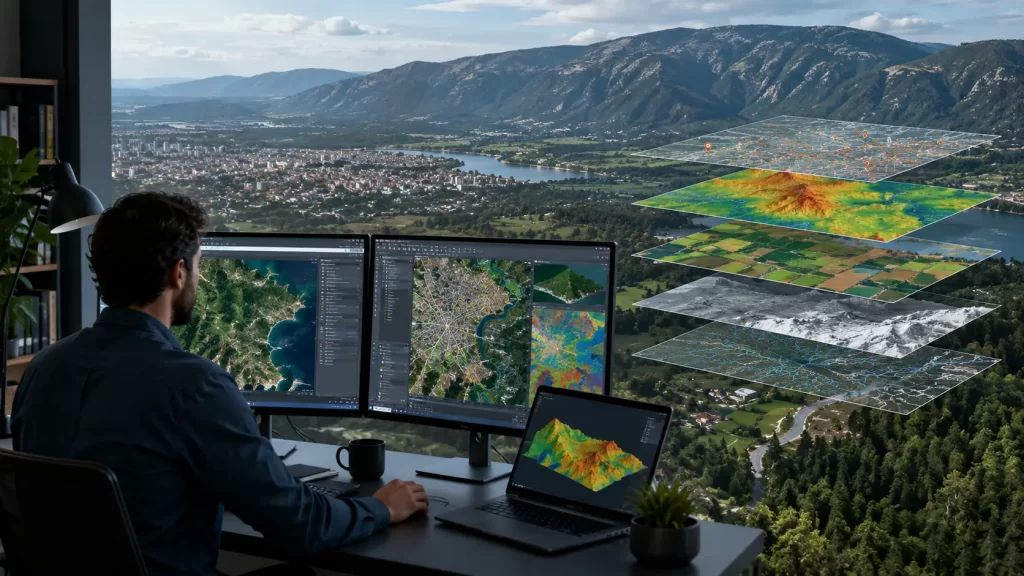
QGIS also excels in data integration. Modern geospatial workflows often require combining information from multiple sources, including satellite imagery, drone surveys, field data collection applications, and spatial databases. QGIS provides a centralized environment where these datasets can be managed efficiently.
The platform’s plugin ecosystem further extends its functionality. Thousands of plugins developed by the GIS community allow users to add specialized capabilities ranging from remote sensing analysis and hydrological modeling to machine learning workflows and advanced cartographic tools.
This flexibility makes QGIS suitable for both beginners learning GIS concepts and experienced professionals managing enterprise-scale geospatial projects.
QGIS Applications Across Industries
The versatility of QGIS has enabled its adoption across a wide range of industries and applications.
Urban planners use QGIS to analyze land use patterns, transportation networks, zoning regulations, and infrastructure development projects. By visualizing geographic relationships, planners can make informed decisions about future city growth and resource allocation.
Environmental organizations leverage QGIS to monitor ecosystems, analyze habitat changes, assess environmental risks, and support conservation initiatives. The integration of satellite imagery and remote sensing datasets allows researchers to evaluate environmental conditions over large geographic areas.
In agriculture, QGIS supports precision farming by helping users analyze crop health, soil conditions, irrigation systems, and field productivity. Combined with satellite data, the platform enables farmers to optimize operations and improve yields.
Infrastructure and utility companies use QGIS to manage assets such as pipelines, power networks, telecommunications systems, and transportation corridors. Spatial analysis capabilities help organizations improve maintenance planning and operational efficiency.
For organizations seeking geospatial expertise, many specialized firms—including a growing number of GIS company in Delhi service providers—utilize QGIS as part of their mapping, surveying, and spatial analysis workflows. Its flexibility and cost-effectiveness make it a practical solution for delivering enterprise GIS services.
The Future of QGIS: AI GIS, Smart Mapping, and Emerging Technologies
As geospatial technology continues to evolve, QGIS is increasingly being integrated with artificial intelligence, machine learning, cloud computing, and advanced remote sensing workflows.
The emergence of AI GIS applications is transforming how spatial data is processed and analyzed. Machine learning algorithms can now classify satellite imagery, detect land-use changes, identify infrastructure assets, and automate feature extraction processes that previously required significant manual effort.
QGIS is adapting to these developments through plugins and integrations that support AI-driven workflows. This allows users to combine traditional GIS analysis with advanced predictive modeling and automated data processing techniques.
The platform is also benefiting from advances in cloud-based geospatial systems, real-time data collection, drone mapping, and digital twin technologies. Organizations can increasingly integrate QGIS into broader geospatial ecosystems that support large-scale decision-making and operational intelligence.
Across the geospatial sector, companies and initiatives such as GeoSmart India continue to demonstrate the growing importance of location intelligence in addressing challenges related to infrastructure, sustainability, disaster management, and urban development.
As demand for geospatial solutions grows, QGIS is likely to remain one of the most influential and widely adopted GIS platforms in the industry.
Conclusion
QGIS has transformed the GIS landscape by providing a powerful, flexible, and cost-effective platform for spatial analysis and mapping. What began as Quantum GIS has evolved into a globally recognized open-source solution used by professionals across government, academia, industry, and research.
Its ability to support advanced mapping, geospatial analysis, remote sensing integration, and emerging AI GIS workflows makes it an invaluable tool in today’s data-driven world. Whether supporting urban planning, environmental monitoring, agriculture, infrastructure management, or geospatial intelligence, QGIS empowers organizations to unlock the full value of geographic information.
As geospatial technologies continue to advance, QGIS will remain a critical platform for professionals seeking to turn location-based data into actionable insights and informed decisions.
FAQs
QGIS is used for mapping, spatial analysis, geospatial data management, cartography, remote sensing, infrastructure planning, environmental monitoring, and location intelligence applications.
Yes. QGIS is completely free and open-source software, making it accessible to individuals, businesses, educational institutions, and government organizations.
QGIS was originally known as Quantum GIS. Today, it is commonly referred to simply as QGIS while retaining its open-source GIS foundation.
Yes. QGIS supports satellite imagery, aerial photography, drone data, and other raster datasets, making it highly effective for remote sensing and Earth observation applications.
Absolutely. QGIS is widely used for enterprise GIS projects, infrastructure management, environmental analysis, urban planning, and geospatial intelligence initiatives across the world.